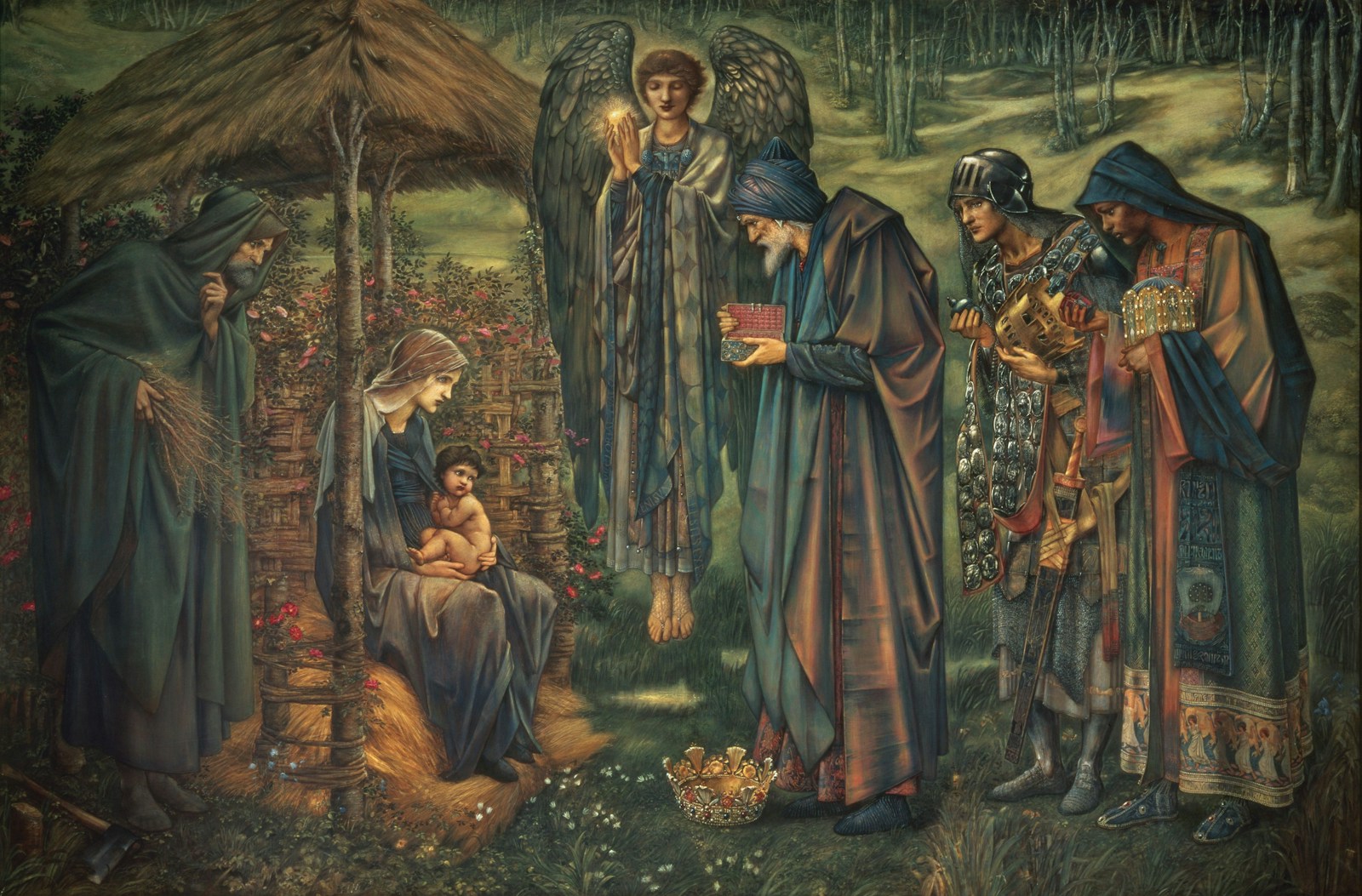
Claims that several ancient gods were resurrected before Jesus have circulated for decades as though they were settled historical facts. The familiar list often includes Osiris, Dionysus, Attis, Adonis, Tammuz, Baal, and sometimes Mithras. Each name is presented as proof of a universal story copied by Christianity: a divine figure dies, remains absent for a short period, and returns to life.
The reality is more complicated. Some traditions contain ancient stories of death, renewal, or divine transformation. Others do not describe resurrection at all. Several of the strongest-sounding parallels depend on late sources, modern reconstructions, or details that do not appear in the relevant ancient texts. The most responsible conclusion is not that every comparison is fraudulent, nor that every comparison proves borrowing. It is that each case must be tested on its own evidence.
Where the “dying and rising god” theory came from
The modern idea of a universal ancient pattern owes much to James Frazer’s The Golden Bough, first published in 1890. Frazer proposed that many religions preserved variations of an agricultural story: a vegetation deity dies as the land becomes barren and returns as the earth becomes fertile again.
The book became enormously influential, expanding from two volumes to twelve by 1915. Yet its broad comparisons were challenged almost from the beginning. Frazer often worked from missionary reports, translations, and accounts produced by other people rather than from sustained fieldwork. Critics argued that he placed very different cultures inside a single framework and treated superficial similarities as evidence of a common religious structure.
Later scholarship did not simply preserve Frazer’s catalog unchanged. In 1987, historian of religions Jonathan Z. Smith reviewed the category of “dying and rising gods” and argued that several famous examples were less securely documented than popular accounts suggested. Some supposed parallels were assembled from fragments belonging to different periods. In other cases, resurrection appears most clearly only in late sources, sometimes after Christianity had already become an established presence.
Why resemblance is not proof of copying
There is a name for the habit of turning every resemblance into evidence of direct influence: parallelomania. Biblical scholar Samuel Sandmel used the term in 1962 to describe the tendency to find two similar stories and immediately conclude that one must have copied the other.
A sound comparison requires more than matching keywords. Researchers must ask when each source was written, whether the relevant passage is complete, how the tradition changed over time, and whether the supposed parallel actually describes the same event. Death, mourning, harvest, spring, and hope for life after death are widespread human concerns. Separate cultures can develop similar symbols without borrowing from one another.
This does not rule out cultural exchange. Ancient societies traded, migrated, conquered, and absorbed one another’s customs. It does mean that influence must be demonstrated rather than assumed. A list that treats every death as a crucifixion, every return as a resurrection, and every spring festival as a Christian predecessor is not historical analysis.
Osiris: transformation rather than a return to ordinary life
Osiris is often described as the clearest pre-Christian resurrection parallel. In Egyptian tradition, he is killed, dismembered, and reassembled by Isis. That outline is genuine, but the conclusion commonly drawn from it is misleading.
Osiris does not return to the world of the living as an ordinary person who resumes his former life. He becomes lord of the underworld, judge, and king of the dead. The story describes a transformation of status and a permanent role in the realm of death, not a return to earthly life in the modern meaning of resurrection.
That distinction matters. Reducing the story to “Osiris died and rose again” removes the central feature that makes the Egyptian account what it is. The comparison becomes more dramatic, but less accurate.
Dionysus and the ambiguity of being “twice born”
Dionysus has a stronger claim to antiquity than several other names on the list. Orphic gold tablets associated with Dionysian initiates date to the fourth century BCE and contain instructions concerning the soul’s fate after death, along with the promise of a divine existence.
Even here, however, the language of resurrection needs care. One important Orphic tradition describes Dionysus as twice born. That is not automatically the same as dying and returning in a recognizable human body. The myth involves divine generation and reconstitution, but the popular summary turns a complex tradition into a simple sequence that the surviving evidence does not necessarily support.
Attis and Adonis: the problem of late evidence
Attis is frequently presented as an almost exact parallel to Jesus: violent death, three days of mourning, and a return to life. The difficulty appears when the sources are dated. The clearest ancient testimony for Attis literally coming back to life is found in the fourth-century writer Firmicus Maternus, at a time when Christianity had already existed for centuries and was competing with older cults in the Roman world.
That late testimony cannot establish that the story influenced the earliest Christian accounts. Influence may have moved in the opposite direction, or both traditions may have developed through later reinterpretation. The evidence does not justify certainty.
Adonis presents a related problem. Early sources emphasize his death and Aphrodite’s mourning. Later versions make a division between the underworld and the surface world more explicit, but a full resurrection is not equally clear in the earliest material. Comparing a developed late form of the story with the first-century Christian tradition, while treating both as though they were unchanged from the beginning, produces a distorted result.
Mithras: the weakest case in the expanded list
Mithras is often added as a seventh example. Popular summaries associate him with December 25 and a resurrection on the third day. Neither claim is firmly supported by surviving Mithraic evidence.
The December 25 association belongs to the late Roman celebration of the unconquered sun, not to a clearly documented Mithraic account of Mithras’s birth. More importantly, no known Mithraic text or relief describes Mithras dying and rising again. His inclusion in the standard list is therefore not a minor exaggeration; it is a claim without a secure ancient foundation.
Tammuz and Baal: ancient traditions that require precision
Tammuz offers one of the strongest chronological cases for a genuine pre-Christian tradition of seasonal mourning and renewal. The Mesopotamian god appears in Sumerian material thousands of years older than Christianity. His annual mourning is associated with the drying of the fields and the return of green life.
The Hebrew Bible also refers to this practice. In Ezekiel 8:14, women are described mourning for Tammuz at the entrance of the Jerusalem temple. This is especially important because the reference comes from within a text that criticizes the practice, demonstrating that the tradition was known in the region before the Christian period.
Baal is more difficult to classify. Ugaritic tablets describe Baal’s conflict with Mot, the god of death, and Baal’s disappearance. His sister Anat avenges him in imagery connected with cutting, burning, grinding, and sowing. Scholars continue to debate whether this represents the personal resurrection of a god or a mythic expression of the seasonal cycle of rain and drought. The story is genuinely ancient, but its meaning should not be sharpened beyond what the text permits.
Why spring festivals recur across cultures
Many traditions connected with renewal appear around the spring equinox. This coincidence does not require a single source or a chain of copying. Communities dependent on agriculture had practical reasons to mark the point when days lengthened, cold receded, and plants began to grow.
People living under similar conditions can arrive at similar religious images independently. A buried seed, a barren field, the return of rain, and the fear of death all provide powerful material for religious imagination. Similarity may reflect shared human experience rather than literary dependence.
Neither exaggerated parallels nor total denial
Correcting weak comparisons does not prove that the Christian resurrection happened, that it was supernatural, or that Christian doctrine is true. Historical criticism and theological belief address different questions. Rejecting an inaccurate argument against Christianity is not the same as confirming Christianity’s central miracle.
The reverse error is just as serious. It is not rigorous to deny every resemblance simply because some popular examples are wrong. Tammuz is genuinely ancient. Baal has a substantial body of early evidence, even though its interpretation remains debated. Dionysus has old traditions concerning divine birth and postmortem existence. Each case deserves a conclusion proportionate to its sources.
Popular apologetics sometimes answers the entire list with blanket denial, while skeptical popular culture often repeats the entire list with blanket confidence. Both approaches favor a clean victory over careful investigation. The result is the same: audiences are encouraged to accept a conclusion before examining the evidence.
Spinoza’s method: examine language, date, and transmission
Baruch Spinoza did not write about Attis or Jonathan Z. Smith, and attributing this specific debate to him would be an invention. His relevance lies in his method. In the Theologico-Political Treatise, Spinoza argued that claims about sacred texts should be examined through their language, historical setting, authorship, and transmission.
That standard applies equally to religious claims and arguments against religion. Before accepting a dramatic parallel, ask what the oldest source actually says. Determine when it was written. Separate the original account from later interpretations. Identify whether “resurrection” means a return to earthly life, a change of status, seasonal renewal, a second birth, or something else entirely.
Spinoza’s broader insight is that religious imagination grows from language, custom, fear, hope, and material conditions. An agricultural society does not need to plagiarize another society to connect death with winter and renewed life with spring. Similar surroundings can generate similar stories.
What the evidence supports
The popular claim that six or seven gods were resurrected before Jesus is neither wholly invented nor reliable as commonly presented. Osiris becomes ruler of the dead rather than returning to ordinary life. Dionysus is twice born, but that formula is not identical to a conventional resurrection. Attis and Adonis rely heavily on later or softened accounts. Mithras has no secure ancient evidence for death and resurrection. Tammuz provides a genuinely ancient pattern of mourning and renewal, while Baal remains an important but debated example.
The responsible conclusion is modest: pre-Christian religions contained stories of death, mourning, renewal, divine transformation, and life after death. Those themes can illuminate the religious world in which Christianity emerged, but they do not by themselves prove direct borrowing or disprove Christian claims. The only dependable path is the unglamorous one: check the date, read the source, preserve the distinctions, and let the strength of the evidence determine the strength of the conclusion.