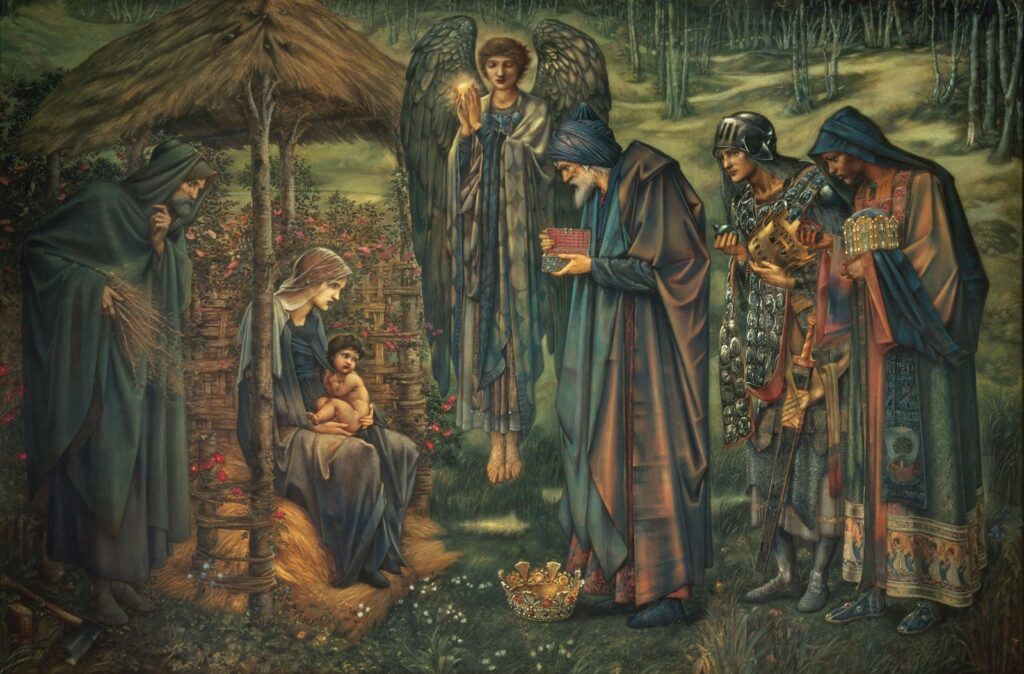
Many readers approach the Bible with a familiar assumption: whenever Scripture uses the word “God,” it must be referring to one clearly defined figure in every passage. Yet the biblical texts themselves are more varied. They speak of the God of Israel, heavenly beings, national gods, divine assemblies, angels, and powers that later generations interpreted in very different ways.
That complexity does not make the Bible incoherent. It shows that the biblical library developed across centuries, preserving older language while also reshaping it around Israel’s worship. Reading these passages carefully reveals an ancient religious world in which divine beings could be acknowledged without being accepted as worthy of worship.
1. Elohim: A Plural Word with More Than One Use
The Hebrew word Elohim is grammatically plural in form, although it frequently takes singular verbs when it refers to Israel’s God. This combination is one reason the word cannot be translated mechanically in every context. Depending on the passage, Elohim may refer to the God of Israel, gods in general, heavenly beings, or members of a supernatural assembly.
The important point is not that the plural form automatically proves a particular theology. Rather, it shows that biblical writers inherited a vocabulary in which the divine realm could be described collectively. The same word could designate the supreme deity in one sentence and lesser spiritual beings in another. Context, grammar, and literary setting determine the meaning.
2. The Divine Council
Several biblical poems portray God presiding over an assembly. Psalm 82 begins with a striking image: God stands in the divine council and judges among the elohim. The scene resembles a royal court, with the supreme ruler addressing subordinate authorities.
This does not mean the writer places Israel’s God on the same level as the other beings. The entire purpose of the psalm is to condemn those authorities for ruling unjustly and to announce their judgment. Their existence is acknowledged, but their power and legitimacy are limited.
Other passages use similar court imagery. The “sons of God” appear before the Lord in the opening chapters of Job, while 1 Kings describes a heavenly host surrounding God’s throne. Such scenes suggest that biblical authors could imagine the cosmos as an ordered kingdom populated by many spiritual beings, with one deity exercising supreme authority.
3. National Gods and the Division of the Nations
One of the most debated passages appears in Deuteronomy 32. In an ancient textual form reflected in the Dead Sea Scrolls and the Greek translation, the nations are divided according to the number of the “sons of God,” while the Lord’s portion is Jacob, Israel. Later Hebrew manuscripts read “sons of Israel,” a wording that changes the image substantially.
The older reading presents a divine geography: the nations are assigned to heavenly beings, while Israel belongs directly to the Lord. This idea helps explain why biblical writers sometimes refer to the gods of other peoples as real entities without granting them equal status. The nations may have their spiritual patrons, but Israel’s God is portrayed as the one who rules above them.
The passage also provides a background for the Bible’s repeated concern with idolatry. The issue is not merely that people are bowing before lifeless objects. In some texts, behind foreign worship stand spiritual powers that compete for loyalty. Israel’s religious reformers therefore treat idolatry as both a political and cosmic betrayal.
4. The Gods of Egypt, Canaan, and Babylon
The biblical writers name or allude to the gods worshiped by surrounding cultures. Egypt’s deities are challenged in the Exodus story, Canaanite figures such as Baal appear throughout the historical books, and Babylon’s religious world stands behind stories of exile and imperial power.
These references serve different purposes. Sometimes they are polemical, presenting foreign gods as defeated or powerless. Sometimes they preserve the assumption that rival spiritual beings exist but are subordinate to the Lord. The Bible can therefore move between mockery, theological warning, and an acknowledgment that other peoples possess genuine religious traditions.
The story of the ark’s capture in 1 Samuel 5 offers a vivid example. When the ark is placed beside the statue of Dagon, the image repeatedly falls before it. The narrative communicates that Israel’s God cannot be reduced to a local idol or confined to a temple. The humiliation of Dagon is also a claim about sovereignty: the God of Israel defeats a rival deity on his own ground.
5. The “Sons of God” and Heavenly Messengers
The phrase “sons of God” can describe members of the heavenly court, but biblical traditions also speak of angels and other messengers. These beings may deliver announcements, execute judgment, protect individuals, or participate in heavenly worship.
Later Jewish interpretation often organized these beings into elaborate hierarchies. Angels received names, offices, and specialized roles. Earlier biblical texts are usually less systematic. They focus on what a messenger does rather than on constructing a complete map of heaven.
The distinction matters because modern readers sometimes force every supernatural figure into the category of “angel.” In the ancient texts, however, the vocabulary is broader. Heavenly beings can function as messengers, warriors, judges, guardians, or members of God’s council. Their roles overlap, but they are not always identical.
6. The Shadow of Religious Reform
As Israel’s religious institutions developed, reformers increasingly insisted on exclusive worship. The reforms associated with Hezekiah and Josiah attacked local shrines, unauthorized altars, sacred objects, and foreign cults. These campaigns attempted to centralize worship in Jerusalem and define loyalty to the Lord in stricter terms.
Religious reform did not erase the older language overnight. Biblical books continued to preserve references to divine beings, rival gods, and heavenly assemblies. Instead, the older material was reread within a stronger framework of monotheistic devotion. Other beings might exist, but they were no longer legitimate recipients of Israel’s worship.
This helps explain why the Bible can sound both pluralistic and uncompromising. Its authors inherited a world filled with spiritual powers, yet they increasingly declared that Israel must serve one Lord alone. The result is not a simple transition from “many gods” to “one God,” but a long process of redefining what divine existence, authority, and worship mean.
7. Spinoza and the Question of Interpretation
Baruch Spinoza approached Scripture as a historical collection shaped by human authors, political circumstances, language, and editorial decisions. His method challenged the assumption that every biblical passage must be harmonized into a single timeless system. For Spinoza, understanding a text required attention to its original setting and to the intentions of the communities that preserved it.
Applied to biblical references to gods and heavenly beings, this approach encourages careful reading rather than quick dismissal. A passage may preserve an older worldview, adapt a traditional image, or use polemic to make a theological claim. The interpreter’s task is to ask how each layer functions instead of forcing all passages into a later doctrinal vocabulary.
A Bible That Preserves Its Religious History
The Bible acknowledges a populated spiritual universe: the God of Israel, members of a heavenly council, national deities, angels, accusers, and other powers. Yet acknowledgment is not endorsement. The central biblical argument is that existence does not equal sovereignty, and power does not equal moral legitimacy.
Seen in this light, the Bible preserves the memory of an ancient world while also arguing against the religious conclusions that world might invite. Its writers debate the status of divine beings, the boundaries of worship, the meaning of Israel’s election, and the relationship between heaven and earthly politics.
Those tensions are not an embarrassment to be hidden. They are evidence of a living tradition wrestling with its own history. Reading them closely produces a more accurate picture of biblical faith—one in which the divine realm is richly populated, but ultimate authority belongs to the God who judges every power, visible or unseen.